
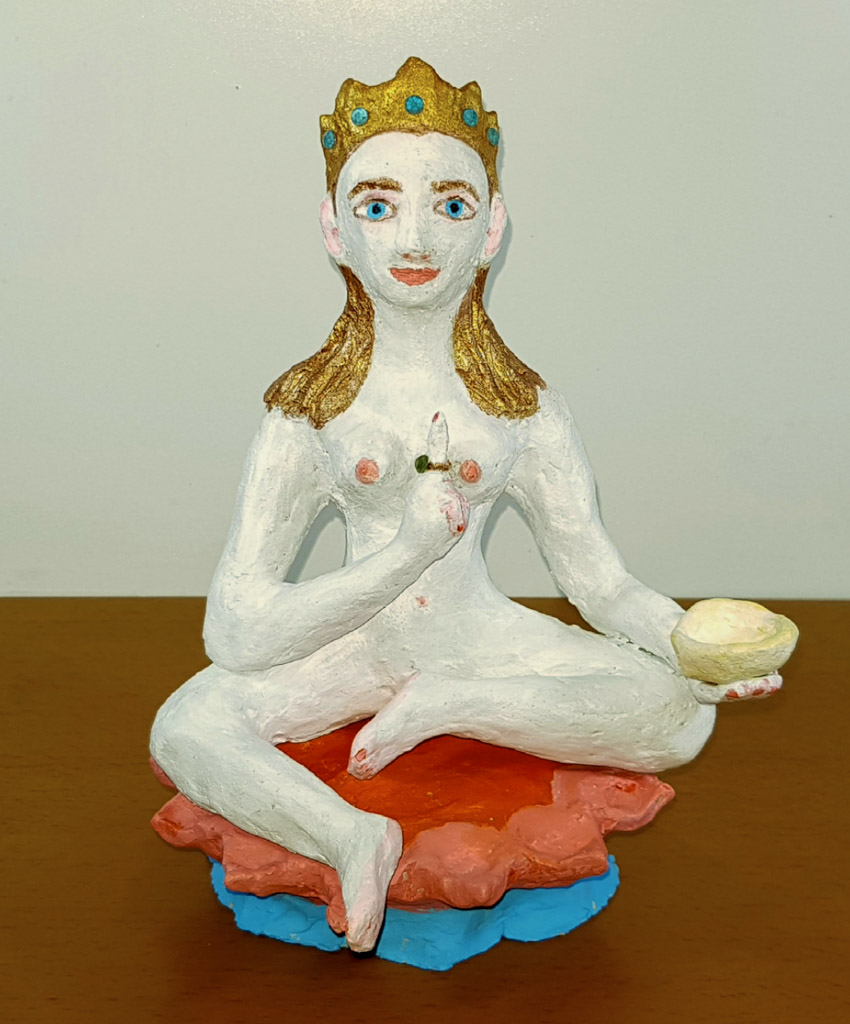
Retelling: Vova Pyatsky and Smadar Pyatsky (based on the translations of the suttas published on Theravada.ru and SuttaCentral.net)
Russian Version: 20. Махасамайя Сутта (Великое Собрание) | Три Ваджры
Translation to English: Roni Sherman and Marina Sherman
Introduction
Once, four gods descended from the Pure Abodes into the earthly realm to greet the Buddha and His Sangha. At that time, the Buddha was staying in a large forest, and a large number of gods attracted to the Presence of the Awakened One and His disciples assembled in this place. Approaching the Buddha, the gods of the Pure Abodes praised the Buddha and the Sangha:
We came to greet the invincible Sangha
In this wondrous assembly of gods and humans.
The disciples here control their mind
Like skillful charioteers — the chariot
Overcoming obstacles, they live a pure life —
Young Nagas tamed by the Clairvoyant
Everyone who have taken Refuge in the Buddha
Will not fall into the lower realms
Having left the body, they will be reborn among the gods.
The Buddha, addressing his disciples, described the subtle beings invisible to the ordinary eye which were present in the assembly:
Yakshas (Yakhas)
There are many brilliant gods shining with different colors in the assembly — yakshas endowed with great power and splendor. Among them is Kumbahara — one of the twelve heavenly leaders of the yakshas (heavenly generals who rule the constellations). All yakshas are endowed with psychic powers and beauty.
The Four Great Kings
The Four Great Kings who govern the four directions of space are in the assembly: in the east — Dhatrattha (Dhitarattha), white in color, the lord of the gandharvas (governing the world through music); in the south —- the blue Virulhada (governing the growth of roots, a warrior with a sword), the lord of the kumbhandas (apparently forest spirits); the Red Viruphaka in the west, the lord of the nagas, possessor of the heavenly eye; The Green Kuvera (Kubera) in the north, the lord of earthly yakshas, the chief of the kings (who holds a rainbow umbrella). These mighty kings, their shining descendents and servant-tricksters who use the powers of illusion humble themselves only before the Buddha and the Sangha.
The Nagas and Garudas (Suppanas)
The Winged Garudas and elusive Nagas reconciled in the Presence of the Buddha, who speaks to the rival beings softly and calms them. Therefore they are present in the assembly, having ceased their hostility.
Asuras
The Asuras, who were defeated by the gods and who live in the ocean surrounding mount Meru, also came to this assembly, led by the planet Rahu (which causes the eclipse of the Sun and Moon). Their hostilities with the gods end in this assembly.
The Gods
The gods of the four elements of the various levels of the heavens appeared in the assembly: Yama (the heavens of the cessation of battles), Tushita (the heavens of shining gods and beautiful gods; the Buddha came to the human world from these heavens), the gods of the Sun and the gods of the Moon, colorful, beautiful, with multiple names.
Brahmas
Sanankumara (see Digha Nikaya 18, 19) and other Brahmas, including beings of the realm of thousand Brahmas (the realm of blinding radiance), the ten Ishvaras (presumably the creators of the ten directions of space) and the Great Brahma himself — are all present in the assembly.
The Approach of Mara with his Army
And so, seeing this great assembly of humans and divine beings of all the worlds, Mara approached with his army and gave the order: “Seize them all, bind them with passions, do not let anyone escape!” Mara’s army began its offensive, Mara himself shook the Earth and raised a hurricane, lightning flashed and thunder struck, but the disciples of the Buddha and the gods with their retinues listened to the sermon of the Buddha, and the passion did not seize them. Mara’s army retreated, not controlling themselves, full of disappointment.
“Yes, they are invincible in battle, joyful, fearless, followers of the Dhamma!” — Mara exclaimed.
Conclusion
The Buddha does not make a clear systematization in describing the deities. He describes many of them twice and three times as belonging to different groups. Folklore motifs and the systematicity of dhamma resonate freely and poetically in the description. The deities are simultaneously both the subtle forces and the skandhas (groups of attachment: form, feelings, notions, volitional impulses and consciousness) of the Buddha and his disciples.
The peculiarity of Mahasamaya sutta is that there are no direct instructions of the Buddha in it. Instead, attention is focused on the very atmosphere in which the transmission of the Teaching takes place. The great assembly of beings visible to the Clairvoyant Buddha — are not only manifestations of natural, cosmic or supernatural forces. No less — is it a manifestation of the mind of the Buddha and his disciples. The external and internal aspects of the atmosphere of the transmission of the Teaching are completely unified. Mara with his army — is simultaneously both an evil spirit of discord in the assembly and the ignorance of the beings themselves, eliminated with the sermon of the Buddha.