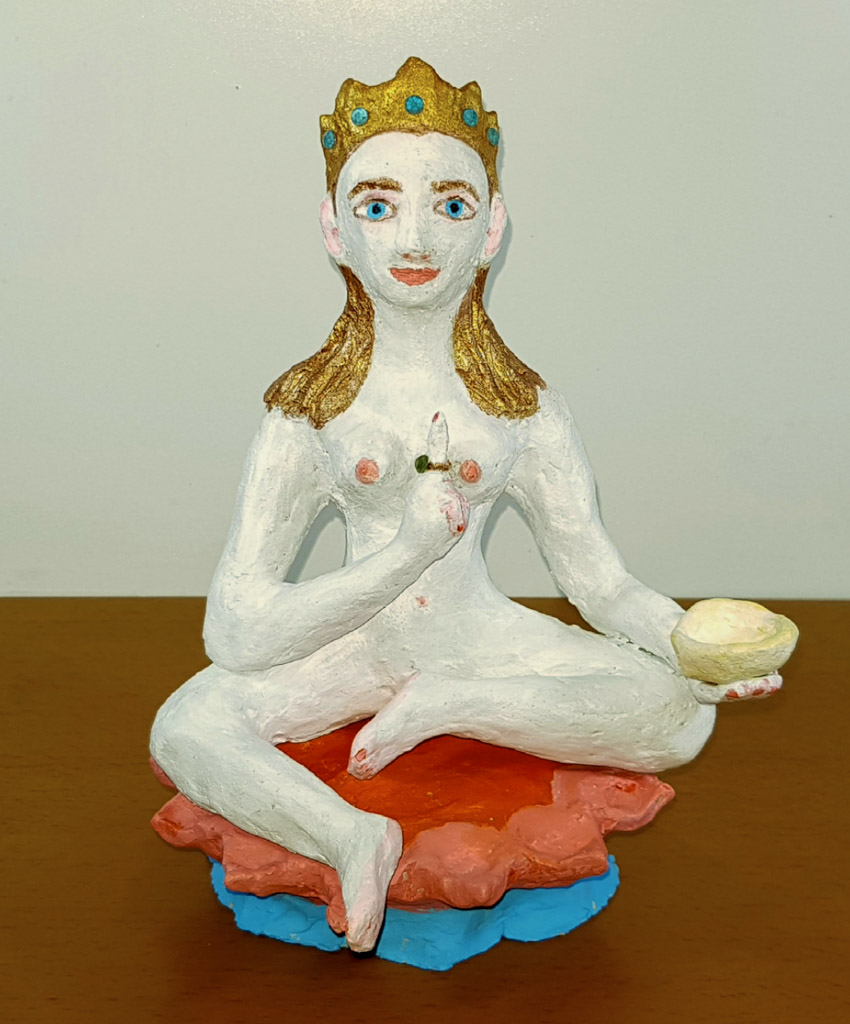
Author: Vladimir Pyatsky
Translation: Natasha Tsimbler
Some trees become stronger as they age. This is true, for example, of oak, cypress, willow, and olive trees. As they age, their wood becomes denser and gains strength. Their fibers begin to fit together perfectly, becoming nearly impervious to decay. The olive tree, for instance, becomes hollow inside, but its walls grow as strong as the rim of a bronze bowl.
Proper aging is the densification of the energy of consciousness and will. When the energy is densified in the consciousness and in the will, feeble desires wane. And on the other hand, if a person indulges in their passions, these frail desires overtake him and lead to a decline in the power of consciousness and will.
While working in a hospital’s sterile equipment department, I met an amazing person. He was approaching retirement age, yet was performing tasks that younger, stronger people struggled with. Standing on a stepladder, he would clean ventilation windows from dust, his head tilted back. This man, who had once taught piano at a music academy, could recite Omar Khayyam’s poetry in Farsi from memory, would drench himself in cold water every day, and played his grand piano at home “instead of meditating”. We became friends, and I am grateful for many of his pieces of advice. One of them turned out to be incredibly important. My friend explained that the common idea of gradually getting used to lukewarm, then cool, and finally cold water is fundamentally wrong and, for weakened individuals, can only lead to colds. I experienced this myself during my unsuccessful childhood body-hardening experiments. His method involved a sudden temperature shift: a brief dousing with near-freezing water, followed by staying warm in a draft-free room. I would pour water at 4–5°C over myself from a three-liter jug kept in the coldest part of the fridge, then wrap myself warmly and sit for morning meditation. After adopting this method, my frequent sinus inflammations ceased, and I became stronger overall.
With proper aging, the mind should grow clearer as its energetic density increases. Proper visualization should systematically train the mind in such densification, creating a channel suitable for proper aging. Below, I provide explanations related to developing clarity of mind, which is essential for forming such a channel.
To clearly visualize the image of a deity, one must consistently contemplate individual features of the chosen figure and then the deity’s overall form.
It’s helpful to focus on between 5 and 21 features of the image.
Let us consider examples of both brief and expanded visualizations of the features of Green Tara.
Brief Visualization
1. The green light radiating from Green Tara’s body brings contentment and relaxation.
2. Her relaxed pose (one half-bent leg slightly extended forward, the other tucked under; one hand at her chest, the other on the knee of the extended leg) resembles a loosened knot. It signifies loosening the knot of attachment to the body and the senses’ activity.
3. The feminine form of Green Tara shows that she is the mother of all beings, the emptiness from which all phenomena arise.
4. The deity’s youthful appearance and beauty represent the unfading joy of pure consciousness.
5. The lotus throne she sits upon symbolizes the heart center in the practitioner’s body.
The result of repeating this brief visualization is increased concentration and awareness of the most coarse emotional hindrances present in the mind (euphoria, desires, sadness, fear, anger, and hostility). During visualization, these mental obstacles reveal themselves through active or passive resistance to the practice – for example, by evoking aversion to the deity’s image, distraction, or a desire to extract some worldly benefit from the meditation.
Expanded Visualization of Green Tara’s Features
In expanded visualization, the features recalled in the brief practice are repeated but supplemented with a more detailed gaze at the image. The list of additional details might look like this:
6-10: Body posture details. The head is slightly tilted, expressing ease. The thumb and ring finger of the hand at her chest touch (Earth mudra, expressing patience). The hand on her knee is turned palm-up toward the viewer (giving mudra, expressing kindness). The foot of the leg, slightly extended forward, touches a second, smaller lotus, symbolizing protection of practitioners’ physical health (the main lotus on which Tara sits is the heart-mind, while the small lotus is the body). The foot of the tucked leg supports breath in the lower abdomen, helping nurture the wisdom she carries in her womb.
11-15: Facial features. The goddess gently smiles, imparting serenity to the meditator's mind. Her eyes move vividly, like waves of insight in the ocean of wisdom. Her ears are large and pleasing in shape, signifying her readiness to listen to the needs of all beings. Her nose, resembling a pleasant hill, represents her gentle nature. Overall, her face is rounded and steady in its expression, symbolizing the perfection and wholeness of the Teaching on the path to ending suffering.
16-20: Tara’s body bears five ornaments: a rainbow shawl, a crown of gold and jewels, turmeric paint on palms and soles, flower garlands, and gold bracelets on wrists and ankles. These five adornments symbolize mastery over the five elements: space, air, fire, water, and earth.
21: Tara’s slight bend at the waist indicates her mastery of the serpent power of awakening, resting coiled at the base of the abdomen.
Final Results of Expanded Visualization
The outcome of this detailed recollection of Green Tara’s features is a stable clarity in perceiving her presence and the ability to detect subtle mental hindrances (such as greed, restlessness, dullness, ill-will, and doubt in the ultimate value of virtue).
General Conclusions on Brief and Expanded Visualization
In general, both types of contemplation, when applied correctly, should lead to increased mental strength and the use of that strength to eliminate deluded qualities. Brief contemplation is better when the mind is overwhelmed with impressions and passions. Expanded contemplation is preferable when the mind is relatively quiet and its negative tendencies are not strongly expressed. In other words, when the power of ignorance overwhelms us, we need to counter it with a small number of features – like a fortress with few gates is easier to defend with limited forces. But if ignorance has temporarily loosened its grip, we should go on the offensive and strike it from all directions, leading our army into the open field.